Sunday, February 12, 2012

Thoughts on Agahozo-Shalom


What’s happening here at Agahozo-Shalom is truly something special. Everything is special, from the kids, to the friendly gardening staff, to the short and long-term volunteers, to the Rwandan counselors who are dedicating their lives to rebuild Rwanda. “This youth village is not only unique to Rwanda, it’s unique to the entire continent of Africa”, said the director of philosophy who we talked to on the first day. No where else are troubled youths being brought together to live together in such a tight nit community, to build, learn, and create a future. This year will be the first graduating class at Agahozo. Everyone is watching intensely to see where these kids will go. They have the skills to go far, but can they do it? I think so, and if they don’t become anything short of doctors, at least they have become better and more educated people.

 And honestly, I’m proud to be a tiny part of this tremendous effort to support these kids. Looking back at High School, I remember the help that I got from each individual, teacher, and friend, and how that helped and encouraged me. Each person played an important rule in supporting me, through the good things that happened, as well as the bad stuff. My teachers inspired me, my guitar teacher taught me how to express myself, my parents helped me with everything, and my friends were there to have fun with when things got too serious. One month ago some of the kids here had had no support group, until they arrived here at Agahozo-Shalom with maybe a small suitcase, or just the clothes on their backs. Now that they’re here, they do have the support that they need, but they could always use more. I had everything I needed to succeed, so why shouldn’t they. They need a guitar teacher, a tutor, and especially a friend. That’s me, that’s why I’m here.

Day 8.5


 The market in Rubona is rather wild on Friday Mornings, with goats running around, people trying to sell unidentified fried foods, and little kids running to schools. If you didn’t know you were in East Afrrica, you would think you were in the Machneh Yehudah Shuk on a Friday afternoon.

 The first highlight from market day was when I gave the correct amount of money to a woman for some bananas, but somehow she gave me back two 100 frank coins (600 is about one dollar). I thought I gave her the right amount, but I guess she wanted a different fairer price. Here is a woman who has maybe a mud hut and some land for a banana farm, giving money back to a rich Muzungu (white person). If that’s not real honesty, I don’t know what is.

 Highlight two was the “pepper from hell” incident. I spotted some small looking peppers lying on the ground, and was exited to buy this rare commodity. In the market you have to buy at least for to six of an item, so I pointed to a small pepper and asked to try one. The woman nodded, and but sternly put up one finger. I put the pepper, which was only the size of my pinky into my mouth, and ate the whole thing in one bite. My throat was the fist thing to catch fire. Next I staggered backwards, and started coughing. 
This was literally the hottest pepper I have ever tasted. I tried drinking water, but I began to tear up. About ten villagers were staring at me with intrigued looks, completely confused by my behavior. The taste didn’t leave my mouth until my friends gave me some gum. Close call.

 Highlight three was the hot milk and bread we got at a little shop. The milk was fresh from the morning, and tasted like Chai. It was in a huge glass. I drank it in about five minutes. It was delicious.  My friend got yogurt, which was extremely sour. Our whole meal was about fifty cents!

 Shabbat at Agahazo-Shalom was interesting. Every Friday we bake challas, which are delicious. The cool thing is that all the Rwandans know what Shabbat is, because there have been a lot of Jewish and Israeli staff and volunteers here. This is rather helpful to me, because I don’t need to necessarily explain when I need to do something special. For example, when I needed to leave basketball practice early for candle lighting, I simply said to the team “It’s the Sabbath, I need to go”, and they all shook there heads knowingly. I sang Kabbalat Shabbat to myself in near the edge of the farm. The birds were chirping beautify, I think they were trying to make minyan with me.

  Today I went on a hike to a lake near the village. We with two of the year long volunteers, who apparently run the two mile stretch down to the lake everyday, to train for the Kigali marathon. Before we went on the hike, Mikey from Tufts, told us that a group of white people had never walked through this specific rural area, “and not to give anyone anything, because that’s what white people always F**ing do”. The route was through some very small villages, with mountains on both sides. Most people were at church because it was Sunday, but the people who were outside their clay houses greeted us politely.

 The river was really beautiful, but we couldn’t swim in it because it was unclean and could have given us parasites. To get back we walked across this rice patty next to the river, via the coolest man made bridge I have ever seen made up of only straw. People had put down a layer of thick straw in the shallow marsh, that is strong enough to hold a person, but will still sink down when stopped on. It’s like a waterbed. Some people ran across in fright, others took their time. I didn’t see any water during the entire journey across, until I took a bad step, and came up with a soggy sneaker. Well worth it!... Pictures soon

Thursday, February 9, 2012

Rwanda day 5


Day 5

I have not written about day four yet, because yesterday we visited the capital city of Kigali and the Genocide memorial, and so I need a more time to write this hard topic.

  Today we taught the farm staff English. Their boss Solomon was nice enough to give them an hour break from their work to learn with us. It took about ten minutes for the thirty farm workers to come back from the field. The farm workers are mostly male, and range in age from fifteen to sixty. They are very poor, but seem to be happy to work at Agahozo. We split them into two groups, and showed them how to greet someone in English. It was fun, and they laughed at us a lot. One of the girls I’m working with from Young Judea is from Canada and has a Canadian accent, which makes it very hard for the workers and even English speaking Rwandans to understand her. I have developed my own accent (which many long-term volunteers also use), which is a slow spoken English with an African type accent and flow. This helps the Rwandans understand me much easier.

 Working with the farm workers was definitely one of the most challenging things I have done educationally in my life. Most of the farmers spoke no English, and did not go to school. With the farmer’s positive spirits, some good planning on our part, and a little bit of luck, it did go rather well.

  I am trying to build up the music program at Agahozo. I restrung a few guitars, and tuned them. The guitar room fills up everyday with tons of kids who simply love playing guitar. You could never tell they have only been playing for only a few months.

 My class was with first year students who are in their enrichment year. I started from the very beginning of guitar, explaining how the instrument works, the terminology for it, and taught them basic chords. I beat a drum, and had them play different chords on my command. They liked it I think.

  After class, this kid came in and started singing some Chris Brown songs and playing guitar. I literally 
stopped what I was doing and stared. This guy sounded like Tracy Chapman I swear. He had this incredible gravely voice, but could also go very high. His name is Blaze, and he has been singing since he was in primary school. I am determined to record him.

  There is also a full fledged recording studio next to the guitar room, with a posse of Senior 6 boys(oldest kids), who make some incredible Rwandan music. It is mostly randb, and sounds a lot like Sean Kingston at times. Their band is called the brave. Just another day at Agahozo…

Tomorrow we wake up at 6 as usual, but this time we will be baking challas. Shabbas in Africa here we come!

I can't see this but maybe it's good
http://www.youtube.com/watch?v=fzwCRBZubec

Tuesday, February 7, 2012

Rwanda Day 3

 Day three was awesome. I accidently slept through breakfast, which allowed a gain of one and a half more hours of precious sleep. I woke up rested, feeling healthy, and ready to help the village. This morning we started at our volunteer placements. I’m working on EFL(English as a foreign language), teaching the farm workers English. The farm workers come from the village next to us called Rubona. Most of them are very poor, and are extremely nice. We thought about teaching emotions, but a counselor at the village Eddy suggested that we not touch upon negative emotions, because some of the farm workers were accused of killing people in the genocide, and may become upset. Eddy is a very upbeat and kind man, and speaks perfect English. He told us his life story, which tragicly included the death of his Grandmother and sister in the genocide. I didn’t internalize what he had said at first, because he is so kind and soft spoken, no matter what he is talking about. It wasn’t till our debriefing meeting which we hold every night, that I really thought about how common and devastating the effects of the Genocide have here.
 Once we finished moving about 1,000 books from one room to another, I visited the kitchen staff. They staff is very nice, and I had a lot of fun mopping their floor for them. The chef wakes up at 3a.m. and doesn’t get off work till around ten. Cooking for 650 people is not easy. What a champ.

 The next awesome thing we did was Tikun Olam. Yes, I did just say the Hebrew words Tikkun Olam, as in helping the world. That is exactly what everyone calls it at Agahozo. The entire village walked about a half hour down the road to Rubona, to help build a house, volunteer at a school, or help out at a village. I was part of the house making. We walked for about twenty minutes through the jungle, which was gorgeous. Stepping outside of the village was very important in order to get a wider perspective of Rwanda, because Agahozo is in many was a bubble. Little kids passing by said “money” to us, or “muzungo”, meaning white person. Overall the people were very nice, and I said “Muraho” to all of them. Yes many of them were poor, but they seemed happy and very comfortable in their town.

  After waking on a small dirt path, we got to a small house built of mud bricks. This house was constructed by last years oldest age group. Our task was to fill in the cracks in the house. The students pored water from jerry cans into a big pit, and mixed the dirst and water together with their feet to make a mud like mortar. I immediately took off my shoes and joined in. It was just like the dead sea mud, but much more fun. Everyone was cheering for us, while we ran in place to mix the mud around. I got very dirty. After we had finished, the assistant director of Agahozo complemented the group on our work, which caused everyone to clap and woop with excitement. Here were underprivileged kids who constantly need help, helping the community.

  I am really getting comfortable here. Today I had two incredible conversations with some students. I was playing guitar outside, when two kids David and Alexander came out from the Abraham Lincoln house. (The oldest kids get to name their houses after they have researched an influential person. David Ben Gurian, and John Lennon are two of the many cool people chosen). David started talking to me about different notes on the guitar(AKA complicated music theory), and absolutely blew my mind with the amount of knowledge he knew. He doesn’t even play guitar.

At dinner I spoke to a girl who had just finished the book Things Fall Apart. I could summarize the book for you, but it would be nothing compared to her recalling of the book. Things Fall Apart is about a man living in Africa named Okonkwow, and how Colonialism enters his life and his community. It’s a GREAT book. She wowed me with her knowledge and incite into the book. After all, English is not her first language! We talked about the book for the entire dinner, and at the end I shared with her some rather complicated symbols in the book. She has a test on Friday, so I hope I didn’t confuse her to much.

Going to the capital Kigali tomorrow. Maybe we will get some food that isn’t rice, potatoes, rice or potatoes? Also, Marsha Leifer is supposed to be bringing me a new camera. No idea why she is coming to Rwanda, but sweet. I apologize for the lame pics so far. I can't upload anything right because the internet is to slow. After all this is Africa. 

The countryside

Monday, February 6, 2012

Rwanda Day 2

Wow, the Agahazo-Shalom Youth Village is the most communal place I have ever experienced.

Our first full day in Rwanda started off at six a.m., with a possible fever, a crummy stomach, and a ten-minute walk in the cold to cafeteria. Breakfast was porridge and a piece of bread. I sat with some young members of the village, and didn’t really say much, considering how early it was. Next we went on a tour of the village given by one of the nine year long volunteers Barett. Barett is from Ohio. She left her job, put her car in storage, and came to Agahozo.


 There are so many aspects to the village. Firstly, it was founded by Anne Hyman, who heard a talk about Rwanda at Tufts University, and realized that the biggest problem in the Rwanda was and is the thousands of orphans. She went to Israel to study the Yemin Orde Youth village, came to Rwanda to find a plot of land, and found a beautiful spot in the rural eastern providence. Some of the highlights on the tour were the farm, the awesome bungalows where the kids live, the hardworking friendly kitchen staff cutting thousands of potatoes, and the Liquidnet family school, which is at the highest point of the village. Liquidnet is Anne Hyman’s husband’s company, which is very philanthropicall. The views  from the village are incredible.


 It felt like it was late in the afternoon, but at only nine o’clock we had done so much already. After the tour we met with a very cool guy who was director of philosophy at the village. He was very kindhearted, and explained to us the background and qualifications to become a student at Agahazo. The selection process is complicated, but essentially the students are the most vulnerable kids in Rwanda, meaning they are orphaned, may come from abusive homes, or have received little education. You would think these kids are not motivated and are intellectually incompetent based on their past. Wrong! The students are extremely friendly, enthusiastic, eager to learn, and are very smart. Of course they have serious issues and memories to deal with, but their spirit is still strong. Their days start at 6am and don’t end till ten. There school is also very demanding.


 After a lunch of rice, potatoes, and a special treat of green beans, we headed to our extra programs (EPS). I chose guitar, because I heard there was no teacher. I walked in to the guitar room to find about fourteen kids playing seven out of tune guitars. One student named Iranahoo was teaching everyone. We went over some basic chords, but there weren’t enough guitars for everyone. I helped out where I could. At the end I thought I would tell them about my passion for music, and give them a demo of some music they maybe hadn’t heard. I encouraged then to express themselves through music, and explained to them what blues music is. They loved it. After class Iranhoo stayed after, and I taught him how to solo and improvise. In the heat of his first jam session ever, he grinned widely. Making someone smile that has had a challenging life is a special feeling. I am excited about teaching guitar, but know it will be very challenging. I feel the most needed, which makes this trip worth it.

 The overall atmosphere of the village is very communal and friendly. There about 650 people working, volunteering, or studying at the village at once, yet everyone greets each other with “Mooraho”, meaning good day. The kids are very tight-knit with each other, and behave exceptionally well. For example, in the four years of ASYV’s existence, not one thing has been stolen. Hopefully in the next couple days I will make some strong connections with people, start feeling better, and maybe even go to the bathroom. After all this is Africa.

Some kids walking up to the school.

The heart of the village

Sunday, February 5, 2012

Rwanda Day 1


The van zoomed down the dusty streets of Kigali, the expert driver navigating through Rwanda’s capital city with ease. Motorcycle cabs cut off the van filled with thirteen young teens, three American volunteers, and of course our driver Paul. We soon left the extremely congested city and headed towards the eastern providence of Rwanda, the scenery quickly changing from dirty streets to lush rolling hills. Rwanda’s used to be called “Land of 1000 hills”, which is very real. From the mini-bus window my first perceptions of Africa were basically exactly what you see in pictures. Woman holding huge baskets on their heads, people carrying water, and little children pointing at the white people in the van. We made our way onto a bumpy road, and after fifteen minutes of harsh bouncing, we reached the entrance to Agahazo-Shalom youth village. After three flights, thirteen hours of travel, and countless preoperational meetings, we made it!

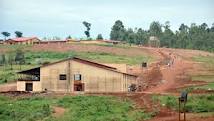
The village is literally in the middle of nowhere. As far as the eye can see there are a few other villages, large mountains, and one lake in the distance. It is about an hour and a half drive from Kigali, through the rural countryside Africa.

When we first got to the village I did not feel very well, but was still able to unpack my stuff. We are staying at the guesthouses, which are actually pretty nice. Of course it is Africa though. There are frequent power outages, many bugs, a very hot sun, and questionable hot water. Dinner was rice and beans, with some delicious fruits. The kids here are all very smart, and love talking to us. I will go more into detail about that tomorrow, as I have to wake at 6am. Rwanda is amazing. Go pats! 

five hour lay over in Addis


 Air Ethiopia


Saturday, February 4, 2012

Rwanda Scouting Report


 My bags are packed and I’m ready to go, but to be honest there really isn’t much in my bags. All I have are a few shirts, some pencils, malaria pills, a positive mental attitude, my camera, and about twenty-five energy bars in case we run out of food. Tomorrow night twelve other Year Coursers and I will embark on a journey completely different than any other experience we have ever had.
 As part of the Social Action track on Year Course, we will be volunteering at the Agahozo-Shalom youth village in Rwanda. For those who don’t know, Rwanda is a small country in southeast Africa that has recently overcame a genocide, and has since become one of the most progressive countries in the area.
 For one month, I will be volunteering at the Aghazo-Shalom Youth Village, which is a school for Orphans of the Genocide. The school was started by a Jewish woman from South Africa named Anne Heyman, who made the connection between the challenges that Israel faced after the Second World War, and the current state in Rwanda. The village is very modern, and holds up to five hundred high school students, who live, study, and undergo therapy to cope with memories from the genocide. At the village I will be farming, helping out in the kitchen, teaching the kids English, sporting, and having an all around awesome time!

   After a ton of preoperational meetings, I would say I feel as prepared as I could be to go to Rwanda, and am pretty dam pumped. The culture in Rwanda is completely different from American or Israeli culture. For example, in Rwanda food is only eaten during meals, and it is simply unheard of for someone to walk around eating an apple. Here are some things about the village that will be cool to look out for.

 Rwanda Scouting Report:

  Pros
-Great group of Year Course kids
-Tons of delicious fresh fruit!
-Weekly school wide runs around campus with 200+ students
-Africans are nasty at soccer (futbol)
-I get to go back to High School
-Don’t have to cook
-Will be more fun than college guaranteed
-Will give me lots of new perspective
-The option to take pictures with little Rwandan children and then set it as my profile picture
-It’s gonna be fun!


Cons
-Malaria
-Power outages
-Showering?
-Missing Year Course
-Won’t get to watch the Patriots crush the Giants live
-Are there any cons to this trip?

 I wouldn’t say that I’ve necessarily always had the idea to go to Africa, but I would say that this type of trip is always something I’ve wanted to do. This is really a once in a lifetime opportunity too see the world, and to help people at the same time. Hopefully they have some good Hummus there!

The Crew for the next month!

Year Course and Yavneh Alum Tamar Gaffin-Cahn(on the right)